







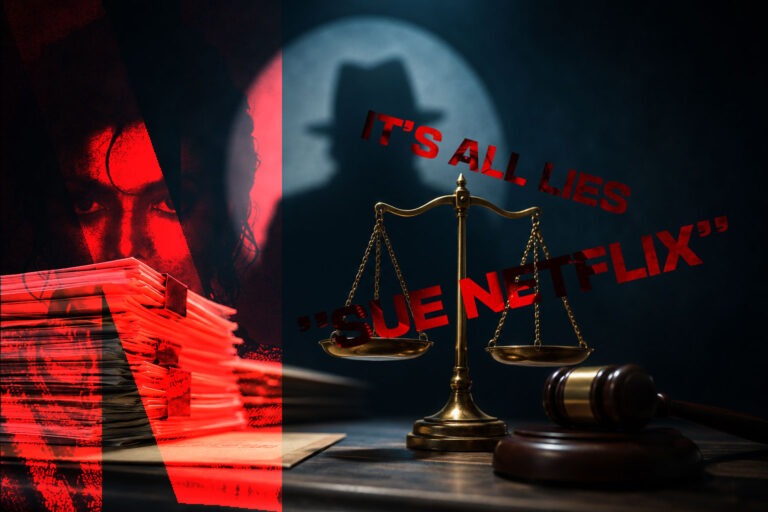

When Netflix announced Michael Jackson: The Verdict, many expected a straightforward courtroom documentary revisiting one of the most famous celebrity trials in history. Instead, the three-part series has reignited one of the internet's most passionate and emotionally charged debates, leaving audiences divided over whether it delivers a balanced historical account or simply reopens old wounds.
A Different Kind of Michael Jackson Documentary
Unlike Leaving Neverland, Michael Jackson: The Verdict focuses almost entirely on the 2005 criminal trial in which Michael Jackson was acquitted on all fourteen charges against him.
The documentary reconstructs the trial using interviews with jurors, prosecutors, defense attorneys, journalists, investigators, and others who were present in the courtroom. Because cameras were prohibited during the trial, Netflix presents the series as an opportunity to show the proceedings through the memories and testimony of those who witnessed them firsthand.
Why Fans Are Angry
Despite Netflix describing the documentary as a forensic examination of the trial, many Jackson supporters argue that the series is anything but neutral.
Much of the criticism centers on what fans believe is selective storytelling. While the documentary includes voices from both the prosecution and the defense, critics argue that it spends considerably more time revisiting allegations than explaining why the jury unanimously acquitted Jackson after months of testimony.
Others believe Netflix intentionally released the documentary to capitalize on renewed public interest following the successful Michael biopic, effectively reviving decades-old controversy for commercial gain. Calls to boycott Netflix and petitions against the documentary quickly spread across social media following its release.
Others Say It Finally Shows the Whole Trial
Supporters of the documentary see things very differently.
They argue that The Verdict finally gives audiences a detailed look at the actual courtroom proceedings instead of relying on media headlines from 2005. Interviews with jurors, attorneys, investigators, and reporters help explain how the case unfolded day by day and why it became one of the most closely watched criminal trials of the century.
From this perspective, the documentary does not seek to overturn the jury's verdict. Instead, it provides context for how both the prosecution and defense presented their cases and allows viewers to draw their own conclusions.
The Challenge of Revisiting History
Perhaps the biggest question raised by Michael Jackson: The Verdict is whether any documentary about Michael Jackson can truly be viewed as impartial.
Jackson remains one of the most beloved entertainers in history, while allegations against him continue to divide public opinion decades after his death. Every new film, documentary, or book enters a conversation that is already deeply polarized.
Some viewers believe the acquittal should remain the defining legal conclusion. Others argue that documentaries serve a different purpose than criminal trials and can explore evidence, testimony, and historical context beyond a courtroom verdict.
That tension ensures that nearly every new project about Jackson is judged not only on its quality, but also on whether audiences perceive it as fair.
A Debate With No Final Verdict
Ironically, a documentary titled The Verdict has produced anything but one.
For some viewers, it is a thoughtful reconstruction of a landmark criminal trial. For others, it is another example of streaming platforms using one of history's biggest celebrities to generate controversy and viewership.
Whatever your opinion, the documentary demonstrates that Michael Jackson's legacy remains one of the most contested in modern popular culture. More than twenty years after his acquittal, and nearly two decades after his death, the public conversation is still very much alive.
Perhaps that is the documentary's greatest achievement, or its greatest criticism. It reminds us that some verdicts end in court, while others continue to be argued in the court of public opinion.
What Do You Think?
What are your thoughts on the documentary from Netflix? Should Netflix pull it off the streaming service or do you think that represents a fair and/or alternate view of who Michael Jackson was?