

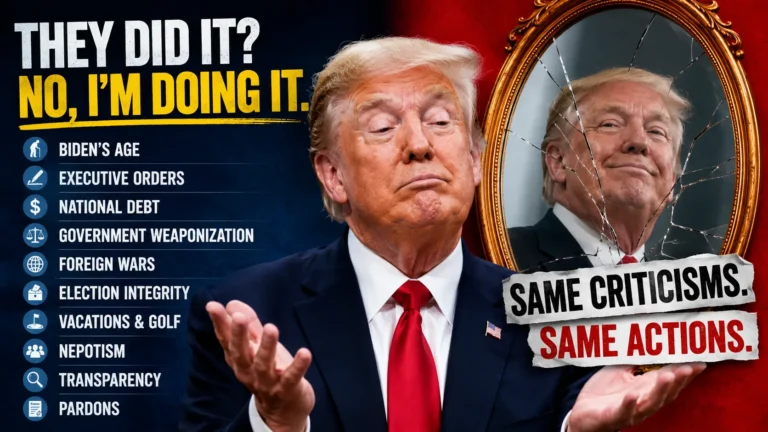

For years, President Donald Trump has built much of his political identity around attacking the actions, policies, and personal traits of other U.S. presidents. Whether criticizing age, government spending, foreign policy, or executive power, Trump has often portrayed himself as the complete opposite of his predecessors.
Yet as his second presidency unfolds, critics argue that many of the very issues Trump used against others have resurfaced under his own administration.
Here is a look at some of the most notable examples.
Biden's Age... Despite Trump Being Older
Throughout the 2024 campaign, Trump repeatedly questioned former President Joe Biden's age, stamina, and mental sharpness.
The irony is difficult to ignore.
- Joe Biden left office at age 82.
- Donald Trump returned to office at age 78.
- Trump is now the oldest person ever sworn in as President of the United States, surpassing Biden's inauguration age by several years.
While Trump often mocked Biden for verbal mistakes or appearing tired, Trump himself has faced increasing scrutiny over his own verbal mix-ups, confusion during speeches, and factual inaccuracies.
The issue illustrates how political attacks often become more complicated when time catches up with every leader.
"Too Many Executive Orders"
Trump frequently accused President Barack Obama and later President Biden of governing through executive orders rather than Congress.
He argued that presidents should work with lawmakers instead of relying on executive authority.
Yet during both his first and second terms, Trump has aggressively used executive orders to implement major policy changes on immigration, trade, energy, federal workforce rules, and regulatory policy.
Although every modern president has relied on executive orders, Trump's own use demonstrates that the tool remains attractive regardless of party.
Exploding the National Debt
Trump regularly criticized Democratic administrations for reckless government spending and growing the national debt.
However, federal debt increased substantially during Trump's first term, driven by:
- The 2017 tax cuts
- Increased military spending
- COVID-19 relief packages passed with bipartisan support
His second administration has continued proposing costly tax reductions and spending initiatives that independent budget analysts project could further increase federal deficits unless matched with spending cuts.
Fiscal conservatives who once applauded Trump's criticism of government debt now face the familiar challenge of balancing tax policy with budget realities.
Government "Weaponization"
One of Trump's most common themes has been that the federal government has been weaponized against political opponents.
He has repeatedly argued that the justice system should never be used as a political tool.
At the same time, Trump has openly discussed:
- Investigating political rivals
- Appointing special prosecutors
- Pursuing criminal investigations involving former officials
- Expanding presidential influence over parts of the Justice Department
Supporters argue these actions restore accountability.
Critics argue they resemble the same practices Trump previously condemned.
Foreign Wars and "America First"
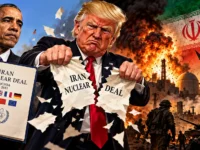
Trump frequently criticized Presidents George W. Bush, Obama, and Biden over America's involvement in foreign conflicts.
His "America First" platform emphasized avoiding expensive overseas wars.
Yet during his presidency, the United States has remained deeply involved internationally through:
- Military deployments
- Arms shipments to allies
- Air strikes against hostile groups
- Increased military readiness in multiple regions
Although Trump has generally avoided launching large-scale invasions similar to Iraq or Afghanistan, critics argue that complete disengagement has proven politically and strategically difficult.
Complaints About Election Integrity
Trump often questioned election integrity after losing the 2020 election, arguing that Americans deserved complete confidence in voting systems.
However, critics note that he has also praised elections that produced favorable outcomes while continuing to challenge results that did not.
Political scientists point out that selective confidence in elections is not unique to one political party, but Trump's continued focus on election legitimacy has made the issue central to modern American politics.
Criticizing Presidential Vacations
During Obama's presidency, Trump frequently criticized the amount of time Obama spent golfing or vacationing.
Once in office himself, Trump visited his own golf properties extensively during his first term.
While every president takes time away from the White House, watchdog groups noted that Trump's frequent visits to his own resorts also raised questions about taxpayer costs and potential financial benefits to businesses he owned.
Attacking Nepotism While Relying on Family
Trump criticized what he described as political insiders and family influence in Washington.
Yet during his first administration:
- His daughter, Ivanka Trump, served as a senior adviser.
- His son-in-law, Jared Kushner, held one of the most influential White House positions.
Family members have also continued to play prominent roles in Trump's political organization and campaign operations.
Supporters argue they were trusted advisers.
Critics view it as an example of the same insider politics Trump pledged to eliminate.
Promising Transparency
Trump often promised unprecedented government transparency.
However, his administrations have faced criticism over:
- Limited press access at times
- Reduced public disclosure in certain areas
- Resistance to releasing some government records
- Extensive legal battles over access to documents
Presidents from both parties have faced similar accusations, illustrating how transparency often proves more difficult in practice than in campaign speeches.
Criticizing Presidential Pardons
Trump criticized controversial pardons issued by previous presidents.
Yet he has issued and supported several highly controversial pardons of his own, including political allies and individuals connected to events surrounding January 6.
As with previous administrations, supporters viewed many pardons as correcting injustices, while opponents viewed them as politically motivated.
Politics Has a Long Memory
Political campaigns often reward sharp contrasts rather than nuance.
Candidates highlight opponents' weaknesses while presenting themselves as fundamentally different. But governing is rarely as simple as campaigning.
Trump is hardly the first president to discover that decisions made from behind the Resolute Desk can look very different than those criticized from the campaign trail. Presidents from both parties have faced accusations of reversing earlier positions once confronted with the realities of governing.
Still, Trump's political brand has been built especially strongly around drawing clear lines between himself and other presidents. That makes instances where his actions mirror his previous criticisms particularly visible, and particularly newsworthy.
Whether these examples represent political hypocrisy, pragmatic leadership, or simply the realities of holding office depends largely on one's political perspective. What is undeniable is that many of the themes Trump used to challenge his predecessors have, in one form or another, become part of his own presidential record.