







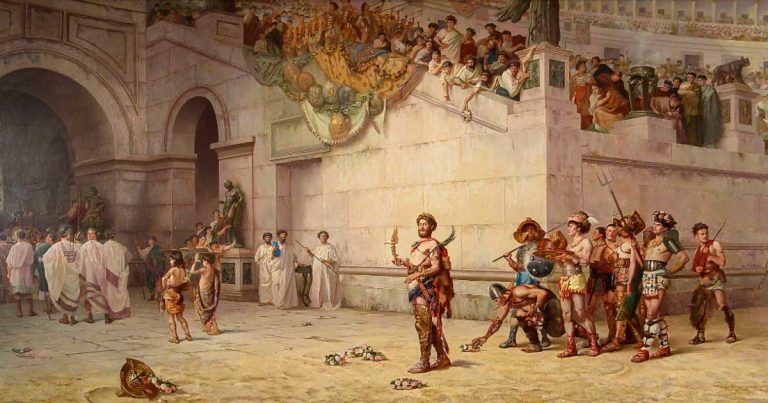

Introduction: When the Coliseum Meets the Cinema
If you’ve ever binge‑watched a Roman epic, you probably picture blood‑splattered sand, clashing swords, and a chorus of spectators chanting “Kill ’em all!” The movies sell us a relentless, death‑by‑the‑minute narrative, but the true story of Rome’s gladiators is a bit more… nuanced.
The Gladiator’s Day Job: Professional Athletes, Not Just Prisoners
| Reality | Hollywood |
|---|---|
| Full‑time professionals – Trained in ludi (gladiator schools) under seasoned lanistae. They followed regimented diets, exercised daily, and received medical attention from Roman physicians. | Slaves doomed to die – Portrayed as hapless captives forced into a fatal showdown. |
| Volunteers too – Some free men (auctorati) sold themselves into the arena for fame, fortune, or to erase debts. | Only the condemned – The notion that every combatant was a condemned criminal. |
Why it matters: Gladiators were an investment. A well‑trained fighter could earn a hefty stipend, win prizes, and even purchase freedom. Killing them indiscriminately would have been a bad business move.
Death Rates: More “Knock‑out” Than “Knock‑out‑and‑Stay‑down”
Scholars estimate that only about 10–15 % of recorded bouts ended in death. The majority concluded once a clear victor emerged, with the referee stepping in to halt further carnage.
What the movies love: Every clash ends with a fatal blow, a final gasp, and a dramatic slow‑motion fall.
What actually happened: The crowd cheered when a gladiator demonstrated skill, not necessarily when he bled out. The arena was a stage for spectacle, not a slaughterhouse.
Weaponry & Armor: Tactical Variety Over Random Mayhem
- Heavy hitters – Secutores and Murmillos wore helmets, shields, and breastplates, wielding short swords (gladii).
- Lightweight tacticians – Retiarii fought with a trident and net, relying on speed and agility.
- Special props – Occasionally a wooden rudis signaled a gladiator’s emancipation.
These pairings weren’t random; they were deliberately chosen to create dramatic contrasts for the audience, much like a modern boxing match pitting a heavyweight against a featherweight for visual flair.
Blood, Guts, and the Crowd’s Thumb
Yes, the arena was bloody. Blunt weapons, broken bones, and occasional dismemberments made for a visceral experience. Yet the crowd held real power. A raised thumb (or more accurately, a turned thumb) could spare a wounded fighter; a hostile roar could seal his fate. The audience’s reaction was a live “vote,” adding genuine tension that no script could replicate.
The Social Engine: Politics, Religion, and Unity
Gladiatorial games weren’t just mindless entertainment:
- Political tool – Emperors used lavish spectacles to curry favor and demonstrate generosity.
- Religious rite – Some combats were tied to funerary customs, honoring the dead.
- Social glue – Citizens from all classes gathered, reinforcing a shared Roman identity.
Modern films often strip away these layers, reducing the arena to a mere backdrop for personal heroics.
Hollywood Tropes vs. Historical Reality
| Hollywood Trope | Historical Reality |
|---|---|
| Every duel ends in death | Most fights end with a victor, not a corpse |
| Gladiators are uniformly enslaved | Many were volunteers seeking fame and fortune |
| Chaotic free‑for‑all brawls | Strict rules, referees, and time limits governed combat |
| Spectators are blood‑thirsty monsters | Audiences were diverse, viewing games as civic duty |
| Gladiators wear flamboyant costumes | Gear was functional, designed to highlight fighting styles |
Bottom Line: Brutal, Yet Not As the Movies Paint It
- Brutality? Undeniably present, real injuries, occasional fatalities, and a raw, physical contest.
- Exaggeration? Absolutely. The cinema amplifies gore, inflates death rates, and simplifies the socio‑political context for dramatic punchlines.
Think of the arena as an ancient version of a mixed‑martial‑arts tournament with a dash of theatrical flair, a sprinkle of political propaganda, and a generous serving of blood.
Conclusion: Lessons From the Sand
Understanding the true nature of Roman gladiators does more than satisfy curiosity, it reminds us how storytelling can reshape history. While movies give us adrenaline‑pumping highlights, the real arena offered a complex tapestry of sport, spectacle, and statecraft. So next time you watch a sword‑clashing saga, remember the gladiators were professional athletes, strategic performers, and political pawns, not just faceless victims of endless carnage.